 tokconnect
TikTok influencer marketing works best when you pick creators on their engagement, not their follower count, and brief them on the exact words their buyers type into search. This page is the campaign playbook: set a goal, find creators, vet them on data, brief them, scale the post that works with Spark Ads, and measure what came back. Two sibling guides handle the finding; this one ties the whole run together.
Every benchmark below comes from a September 2026 sample of 58 creators surfaced by TikTok search in six niches, plus a fresh follower pull you can open. Where we quote rates, they come from named 2025 and 2026 rate guides, and they vary widely, so treat them as a starting point and not a price list.
The TikTok influencer marketing playbook, in six steps
Six steps, and one rule that runs through all of them: judge a creator by how people respond to their videos, not by the size of the number under their name. Here is the whole run, with the tool or guide that does each step.
| Step | What you do | Where it happens |
|---|---|---|
| 1. Set the goal | Decide awareness, sales or UGC before you shortlist | This page |
| 2. Find creators | Search TikTok, TikTok One and the Shop Affiliate Center | Find influencers, find UGC creators, Creator Marketplace |
| 3. Vet | Rank on engagement and reach per follower | Engagement rate calculator |
| 4. Brief | Give them the search words their audience uses | Keyword research, hooks |
| 5. Scale | Run the winning post as a Spark Ad | Spark Ads |
| 6. Measure | Read comments, not just view counts | Comment finder |
The rule is not a slogan. It is the clearest thing in our data, so here it is before the steps that use it.
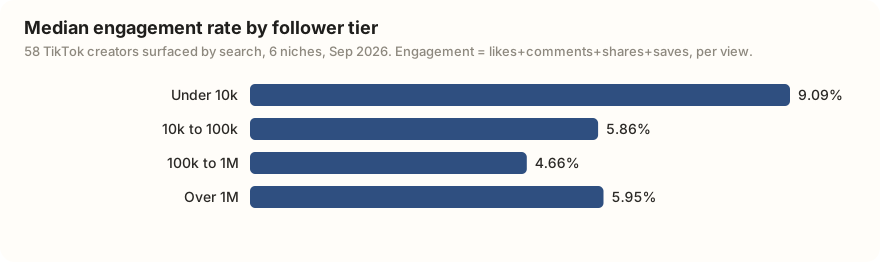
Data: engagement = likes + comments + shares + saves, divided by plays, taken as the median post per creator, then the median creator per tier. 58-creator sample.
Step 1: Set the goal before you touch a creator list
Three goals lead to three different campaigns, and picking the wrong creator for your goal is the most expensive mistake on this page. Decide which one you are running first.
- Awareness. You want reach. A larger creator or a viral-leaning niche account makes sense, and you judge success on plays and new followers.
- Sales. You want clicks and orders. A mid-size creator with high saves and a trusting niche audience beats a bigger one, and you measure trackable links, codes or TikTok Shop numbers.
- UGC. You want video files to run on your own channels and as ads, not posts to someone's audience. Follower count is irrelevant here; you are buying footage. The find UGC creators guide covers that search, which is a different one from finding influencers.
Write the goal down in one sentence, because it decides every filter you set in the next three steps. "Sales of a $40 skincare product to women in their twenties" tells you the tier, the niche and the metric; "grow our TikTok" does not.
Step 2: Find the creators
Start with TikTok's own search, which is free and shows you every creator, not just the ones who signed up to a database. The find TikTok influencers guide walks through the Users tab, TikTok One and the Shop Affiliate Center; TikTok's old Creator Marketplace now sits inside TikTok One, covered in the Creator Marketplace guide.
The one thing to know before you search: the phrase you type sets who you find. We searched four phrasings of a single niche, home, and pulled the first ten accounts for each.
| Search phrase | Median followers | Follower range |
|---|---|---|
| "diy home" | 8,651 | 350 to 632,648 |
| "home decor" | 93,143 | 16,954 to 498,829 |
| "home renovation" | 193,543 | 1,433 to 2,418,135 |
| "interior design" | 1,196,792 | 94,601 to 5,500,115 |
Data: TikTok user search via TokConnect, pulled 22 September 2026, four phrasings of one niche, first 10 accounts each. Snapshot, with identifiers stripped.
Same niche, and the median creator ranges from 8,651 followers to 1.2 million depending on the words. Search two or three phrasings your customers would actually use, pool the results, and you have a shortlist that spans tiers. Do not stop at the first search, and do not let the biggest names crowd out the small ones, because the next step is about to favour the small ones.
Step 3: Vet by engagement, not followers
Follower count tells you how many people once tapped follow. It does not tell you how many watch, and it does not tell you whether anyone acts. Two numbers do: engagement rate, which is likes, comments, shares and saves divided by plays, and reach per follower, which is how many plays a post gets for each follower the account has.
| Follower tier | Median engagement rate | Plays per follower | Creators |
|---|---|---|---|
| Under 10k | 9.09% | 1.01 | 5 |
| 10k to 100k | 5.86% | 0.30 | 7 |
| 100k to 1M | 4.66% | 0.07 | 17 |
| Over 1M | 5.95% | 0.04 | 29 |
Data: 58 creators in six niches via TokConnect, September 2026. Engagement rate is per view; plays per follower is each creator's median post plays divided by their followers, then the median creator per tier. Snapshot.
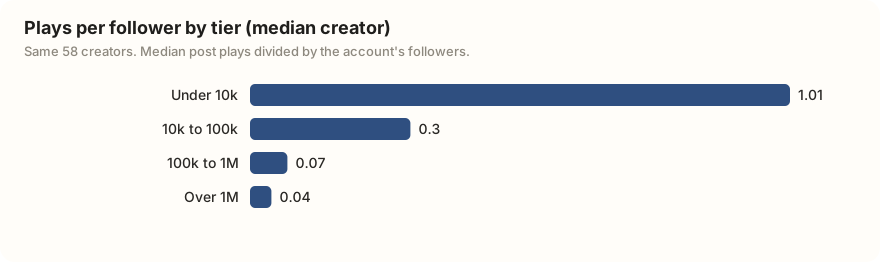
Read the plays-per-follower column and the case for micro creators writes itself. A creator under 10k followers reaches about one person for every follower they have; a creator over a million reaches about one in twenty-five. TikTok pushes videos to people who do not follow the account, and small accounts benefit from that far more, which is why an under-10k creator can out-reach a mega account relative to what you pay. Engagement rate tells the same story: the smallest tier sits near 9% while the giants sit around 6%.
The follower number is the one metric a creator cannot fake with a good week and the one that predicts a campaign least. In our sample the account with the most followers in its niche was rarely the one with the best engagement or the best reach per follower. Pull a creator's last ten posts, take the median plays and saves, and rank on those. r/marketing's November 2025 thread "Follower count is the worst metric for picking creators" is the same point stated as opinion; the table above is what it looks like as numbers.
Take the median, not the average, because one video TikTok happened to push to millions will flatter an average and hide nine ordinary posts. The engagement rate calculator turns a creator's counts into a single figure and compares it to its tier, so you can screen a shortlist in minutes. The r/influencermarketing thread "Advice for sourcing creators on TikTok/Instagram" (January 2026) is full of teams learning this the slow way, one browser tab per creator. You can do it in one prompt instead.
Find 20 creators in [niche] under 50k followers who rank in TikTok search and show their engagement. Search users for two or three phrasings of the niche, profile each account, pull their last 10 posts, compute median plays, median saves and engagement rate, and give me a table sorted by engagement rate with the follower count and posting span for each.
Works in Claude, ChatGPT, Cursor and Gemini once TokConnect is connected. Get a free key (100 credits, no card) or see the setup guides.
Step 4: Brief them on the words their audience searches
A brief that says "make something fun about our product" wastes the creator's judgement and your money. A brief that gives them the phrases their audience types into TikTok search gives the video a job. TikTok is a search engine now, and a video built around a real query keeps getting found for months after the post date.
Pull the search terms first. The keyword research guide shows how to find the phrases and their volumes in Creator Search Insights, so you can hand the creator "how to layer skincare" rather than a vague theme. Then let them write the opening line, because the first two seconds decide whether anyone stays; the hooks guide has patterns that work. Give them the target phrase and the freedom to hook it their way, and put both in the brief along with the deliverable, the usage rights, the fee and the date.
Step 5: Scale the winner with Spark Ads
When a creator's post lands, do not commission a second one and hope. Put ad budget behind the post that already worked. Spark Ads run an existing organic video, from the creator's own account, as an ad, so it keeps its comments, its sound and the trust of coming from a real person. The Spark Ads guide covers the setup and the authorisation code you need from the creator.
This is where micro creators pay off twice. You find the video that resonates with a small, engaged audience cheaply, then you buy it the reach it could not get organically. Ask for Spark Ads rights in the first brief, because bolting them on afterwards costs more and sometimes stalls while the creator works out how to grant the code.
Step 6: Measure with comments, not just views
Match the metric to the goal you set in step one. Awareness is plays and reach. Consideration is saves and shares, because both mean someone chose to keep the video rather than scroll past it. Sales are trackable links, discount codes or TikTok Shop orders. Do not report the metric that looks best; report the one you promised.
Then read the comments, which is the signal a dashboard misses. Comments tell you whether people understood the offer, what they objected to, and what they asked that the video did not answer. The comment finder pulls a video's comments so you can search them for questions and complaints, which is where your next brief comes from. The r/advertising thread "How are agencies actually finding TikTok creators at scale" (September 2025) is really about running this loop without drowning in tabs, and it points at the same answer: automate the pulls, keep the judgement.
What to pay
Rates vary widely, so anchor on published ranges rather than a made-up card. For 2026, Influencer Marketing Hub gives per-video ranges by tier.
| Tier | Followers | Per video (2026) |
|---|---|---|
| Nano | 1k to 10k | $50 to $200 |
| Micro | 10k to 100k | $200 to $800 |
| Macro | 100k to 1M | $800 to $5,000 |
| Mega | Over 1M | $5,000 to $50,000+ |
Source: Influencer Marketing Hub, TikTok Influencer Rates 2026. Ranges are per organic video and vary widely by niche and engagement.
Two caveats change the number. Usage rights and Spark Ads amplification are charged on top of the base rate, so a video you plan to run as an ad costs more than one that only posts organically. And Later notes that TikTok rates are increasingly tied to a creator's average views rather than their follower count, because any video can travel regardless of audience size. That is the pricing side of everything above: pay for the reach and the response a creator actually gets, which is exactly what step three measures. Confirm the fee, the rights and the deliverables in writing before anything ships, and check the ranges again at the time, because they move. The influencer marketing overview covers the plan and the workflow that fit a repeatable campaign.
Frequently asked questions
How much does TikTok influencer marketing cost?
It depends on the creator's reach and the rights you buy, not just their follower count. For 2026, Influencer Marketing Hub puts a single video at roughly $50 to $200 for a nano creator (1k to 10k followers), $200 to $800 for a micro creator (10k to 100k), $800 to $5,000 for a macro creator (100k to 1M), and $5,000 upward for creators over a million. Usage rights and Spark Ads amplification are charged on top. Treat these as a starting point, because rates vary widely by niche and engagement.
Are micro influencers better than big creators on TikTok?
Often, on the numbers that predict a response. In our September 2026 sample of 58 creators, accounts under 10k followers had a median engagement rate of 9.1% and accounts from 10k to 100k had 5.9%, against 4.7% for 100k to 1M and 6.0% over 1M. Small accounts also reach far more people for their size: about one play per follower under 10k, against 0.04 over a million. A micro creator with a tight niche and steady saves usually costs less and moves more than a mega account you are really paying for awareness.
How do I find TikTok influencers for my brand?
Start with TikTok's own search and search two or three phrasings of your niche, because the phrase you type changes who shows up. The find TikTok influencers guide covers the free Users tab, TikTok One and the Shop Affiliate Center; the find UGC creators guide covers the people who film content for your own channels. TikTok's old Creator Marketplace now lives inside TikTok One, explained in the Creator Marketplace guide.
How do I work with TikTok influencers?
Run it as six steps: set a goal (awareness, sales or UGC), find creators, vet them on engagement rather than followers, brief them on the search words their audience uses, scale the post that works as a Spark Ad, and measure the response. Put a number in every brief: the deliverable, the usage rights, the fee and the timeline. This page walks through each step with data.
What engagement rate is good for a TikTok influencer?
Compare it to the creator's tier. In our sample the median engagement rate by views was about 9% for accounts under 10k followers and 5% to 6% for larger accounts, so a mid-size creator above 5% is healthy and one below 3% deserves a closer look. The engagement rate calculator turns a creator's likes, comments, shares and saves into a single figure and compares it to its tier.
How do you measure a TikTok influencer campaign?
Match the metric to the goal. For awareness, track plays and reach; for consideration, track saves and shares, which mean people are keeping the video; for sales, use trackable links, codes or TikTok Shop numbers. Read the comments too, because they tell you whether people got the message or just liked the sound. The comment finder pulls a video's comments so you can search them for questions and objections.