 tokconnect
To get brand deals on TikTok, you need two things a brand can check in thirty seconds: a clear niche and a real engagement rate. Followers help you get noticed, but the number that closes a paid partnership is the share of viewers who like, comment, share or save your videos. Learning how to get brand deals on TikTok is mostly about proving that number, packaging it in a short media kit, and pitching the right people.
This page walks through the whole path: reaching the point brands care about, joining the places brands look, building a media kit, setting rates from sourced ranges, sending an outreach message, and turning one deal into repeat work. Every figure comes from a source you can open.
How to get brand deals on TikTok, in six steps
Here is the short version. The rest of the page explains each step.
- Pick one niche and post in it until your engagement rate is steady.
- Join where brands search for creators: TikTok's Creator Marketplace and UGC platforms.
- Build a one-page media kit with your niche, audience and engagement rate.
- Set a rate range using current market data, not a made-up number.
- Pitch brands directly with a short, specific message.
- Deliver on time, report the results, and ask for the next one.
What brands check before a deal
Brands do not buy followers. They buy attention in a niche they sell to. So the first thing a brand manager looks at is whether your videos are about one clear thing, and whether people engage with them.
Engagement rate is the share of viewers who did something beyond watching: liked, commented, shared or saved. You get it by adding those four counts and dividing by views. That is the "by views" rate, and it is what most brands quote. A September 2026 sample of 58 creators surfaced by TikTok search, across six niches, shows where that number usually lands.
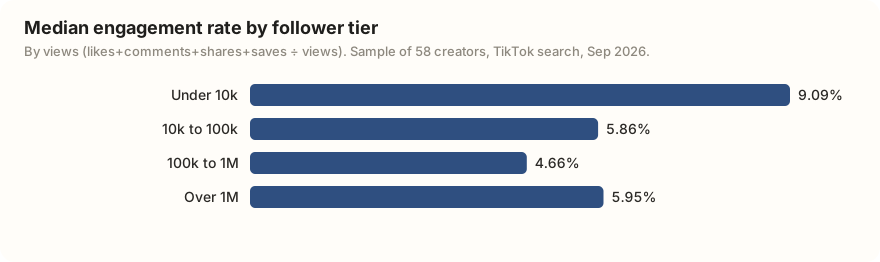
| Followers | Creators | Median engagement by views | Top quarter starts at |
|---|---|---|---|
| Under 10k | 5 | 9.09% | 12.27% |
| 10k to 100k | 7 | 5.86% | 6.89% |
| 100k to 1M | 17 | 4.66% | 7.82% |
| Over 1M | 29 | 5.95% | 6.94% |
Data: TikTok engagement sample of 58 creators, 572 posts, September 2026. Open the snapshot. Work out your own number with the engagement rate calculator so you can quote a real figure.
Read this two ways. First, small accounts often engage harder, so you do not need a million followers to be worth paying. Second, "good" depends on your tier, so quote your rate against the tier you are in, not against a creator ten times your size.
If you name a price before you know your own engagement rate, you are guessing, and a brand can tell. Pull your last 20 to 30 posts, work out your median engagement by views, and put that number next to your price. A steady 6% on 30,000 followers wins deals that a shaky 2% on 300,000 loses.
Where brands look for creators
Some deals come from brands finding you. You raise the odds by being in the places they search.
TikTok Creator Marketplace (now part of TikTok One)
The TikTok Creator Marketplace is TikTok's official tool for connecting creators with brands. It has moved under TikTok's "TikTok One" hub for marketers, and it lets brands filter creators by niche, audience and past performance. Set up your profile, connect your account so your real stats show, and you become searchable to brands running campaigns.
UGC platforms
Plenty of paid work is user-generated content: videos a brand pays you to make and then posts or runs as an ad on their own account. You do not always need a big following for this, because the brand supplies the reach. Sign up to a few UGC marketplaces and keep a small portfolio ready. Our guide on how brands find UGC creators shows the same process from the brand's side, which tells you what they screen for.
Build a TikTok media kit
A media kit is a one-page summary a brand can read in a minute. Keep it plain. It should include:
- Your niche and who watches you.
- Your audience: rough age, main countries, and the split between women and men where you know it.
- Your engagement rate, by views, with the date you measured it.
- Two or three of your best recent posts, with their views and engagement.
- Any past brand work, even unpaid or gifted, with a link.
- How to contact you and what you offer (one video, a set, or UGC).
That is the whole list. You do not need a designer. A clean page with real numbers beats a glossy one with vague claims. Refresh the engagement figure every month or two so it is never stale, and quote it against your tier from the table above.
Pull my last 30 posts and calculate the engagement rate I can put in my media kit. Use likes, comments, shares and saves divided by views, give me the median across the posts, and tell me how it compares to the median for my follower tier.
Works in Claude, ChatGPT, Cursor and Gemini once TokConnect is connected. Get a free key (100 credits, no card) or see the setup guides.
How much to charge for a TikTok sponsorship
There is no fixed price, and anyone who hands you one is guessing. Rates depend on your niche, your engagement, what the brand wants (one video, a set, usage as a paid ad), and how long they can reuse it. What you can do is start from current market ranges and adjust.
Influencer Marketing Hub's 2026 TikTok rate guide gives these per-video ranges by follower tier. Treat them as a starting point, not a rate card.
| Tier | Followers | Per sponsored video |
|---|---|---|
| Nano | 1k to 10k | $50 to $200 |
| Micro | 10k to 100k | $200 to $800 |
| Macro | 100k to 1M | $800 to $5,000 |
| Mega | 1M+ | $5,000 to $50,000+ |
Ranges: Influencer Marketing Hub, TikTok Influencer Rates, updated 2026. A common industry rule of thumb is roughly $5 to $15 per 1,000 followers for a standard in-feed video, but engagement and usage rights move it more than follower count does.
A workable method: find your tier's range, then move up if your engagement rate beats your tier's median and down if it lags. Charge more when the brand wants to run your video as a paid ad or keep it for months, because that is worth far more to them than a single organic post. When you are new, gifting or a small fee plus product is a normal way to get your first credits.
How to reach out to brands
Most deals for small and mid-size creators come from pitching, not waiting. Creators on r/AskMarketing ("How do I reach out to brands for TikTok collabs?", October 2025) and r/influencermarketing ("How do you correctly outreach micro influencers in TikTok?", June 2026) report the same thing: short, specific messages to the right person beat long templates blasted everywhere.
Find the brand's marketing or partnerships email, or the contact on their site. Then send something like this: who you are and your niche in one line, your follower count and engagement rate, one idea for a video that fits their product, and your rate or a request to discuss it. Attach or link your media kit. Keep it under 150 words.
Say it is an ad
When a brand pays you, or gives you free product, you must disclose it. Two rules apply at once. TikTok requires you to turn on the "Disclose commercial content" toggle and pick "Branded Content" when you post a paid partnership; TikTok tightened these branded-content rules in September 2025 (TikTok's creator disclosure help page). The US Federal Trade Commission separately requires a clear disclosure of any "material connection" with the brand, and it names #ad and "Sponsored by" as adequate examples (FTC, Disclosures 101 for Social Media Influencers). The safe move is to do both: toggle the setting on and write #ad in your caption. The FTC has said the platform toggle alone is not enough for its rules.
Deliver, then get repeat work
The first deal is the hard one. Repeat deals are where the money is, and they are easier to earn. Deliver on the date you agreed, post to the brief, and use the disclosure. Then send the brand a short results note a week later: views, engagement, saves, any comments worth showing.
That report is your pitch for the next campaign. A brand that has seen your numbers once, with real deliverables, will skip the vetting the second time. Ask directly whether they run creators on a regular basis.
Brand deals, affiliate and Creator Rewards are different
People mix these up, and it costs them money. They pay in different ways.
| Path | Who pays you | How |
|---|---|---|
| Brand deal | The brand, directly | A fee (and sometimes product) for making a video to a brief |
| TikTok Shop affiliate | The seller, through TikTok Shop | Commission on sales from your video, no upfront fee |
| Creator Rewards Program | TikTok | A per-view style payout for qualifying long videos, tied to search value |
Threads on r/TikTokshop comparing affiliate and brand deals make the trade clear: affiliate pays only when people buy, while a brand deal pays whether they buy or not. See TikTok Shop affiliate requirements for the commission route and the Creator Rewards Program for TikTok's own payout. Many creators run all three at once, and our guide on how to make money on TikTok covers how they fit together.
Frequently asked questions
How do I get brand deals on TikTok?
Post in one clear niche until your engagement rate is steady, work out that rate, and put it in a one-page media kit. Then get found through the TikTok Creator Marketplace and UGC platforms, and pitch brands directly with a short, specific message and one video idea that fits their product.
How many followers do you need for brand deals?
There is no minimum. Brands pay nano and micro creators (from about 1,000 followers) when the engagement rate is strong, because smaller accounts often engage harder. In a September 2026 sample of 58 creators, the under-10k tier had a median engagement rate by views of about 9%, higher than the larger tiers. Engagement matters more than raw followers.
How much should I charge for a TikTok?
It varies by niche, engagement and usage. As a starting point, Influencer Marketing Hub's 2026 ranges are roughly $50 to $200 per video for nano creators, $200 to $800 for micro, and $800 to $5,000 for macro. Move up if your engagement beats your tier's median or the brand wants to run your video as a paid ad.
What is a media kit?
A media kit is a one-page summary you send to brands. It lists your niche, your audience (rough age, main countries and gender split), your engagement rate with the date you measured it, two or three of your best posts, any past brand work, and how to contact you. Keep it plain; real numbers beat glossy design.
Do I have to say #ad?
Yes. When a brand pays you or gives you free product, disclose it. TikTok requires you to turn on the "Disclose commercial content" toggle and pick Branded Content, and the US FTC separately requires a clear disclosure such as #ad or "Sponsored by" for any paid relationship. Do both: toggle it on and write #ad. The FTC has said the toggle alone is not enough for its rules.
How do I find brands to work with?
Set up a Creator Marketplace profile so brands can find you, sign up to a few UGC platforms, and pitch brands you already use. Look for the partnerships or marketing contact on a brand's site, and send a short message with your niche, engagement rate and one video idea.