 tokconnect
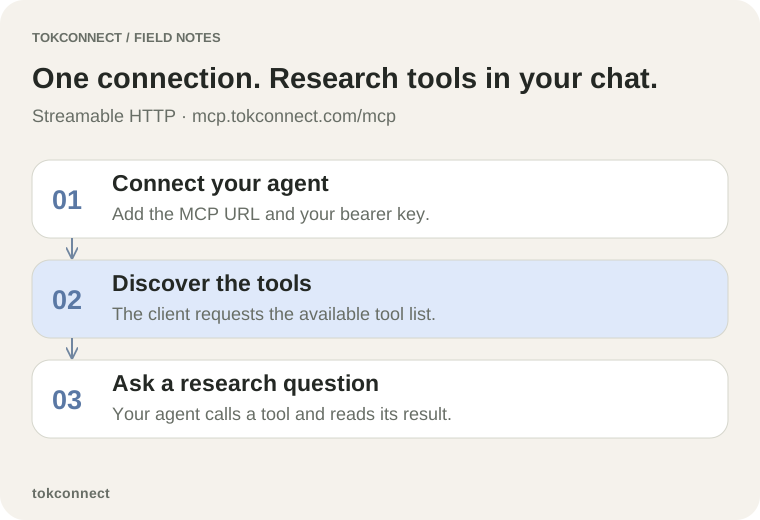
Gemini CLI supports remote Streamable HTTP MCP servers. TokConnect's endpoint is https://mcp.tokconnect.com/mcp; it requires Authorization: Bearer YOUR_TOKCONNECT_KEY. Get the key from TokConnect before you add the server.
Add the HTTP server
Gemini CLI documents --transport http for Streamable HTTP and --header for custom request headers. The command defaults to a project scope; add --scope user if you want the server in your user settings.
gemini mcp add --scope user --transport http \
  --header "Authorization: Bearer YOUR_TOKCONNECT_KEY" \
  tokconnect https://mcp.tokconnect.com/mcp
The command writes the server configuration to Gemini CLI settings. Inspect the resulting settings and its file permissions before you use a key that needs long-term protection. Gemini's documented environment-variable expansion applies to the env block for a server process; its MCP reference does not state that header values expand from environment variables.
Pick the settings scope
| Scope | Settings file | When to choose it |
|---|---|---|
| User | ~/.gemini/settings.json | A personal bearer key used from several workspaces. |
| Project | .gemini/settings.json | A repository that has an agreed, separate way to supply credentials. |
The command defaults to project scope, so include --scope user when you mean the user file. Begin with one scope. Two same-named entries can leave you debugging the wrong setting after changing a header. A project file should not contain a live key merely because it is convenient to share a server definition.
Inspect the settings shape
A manually configured remote server uses httpUrl, not url. Gemini CLI reserves url for an SSE endpoint.
{
  "mcpServers": {
    "tokconnect": {
      "httpUrl": "https://mcp.tokconnect.com/mcp",
      "headers": {
        "Authorization": "Bearer YOUR_TOKCONNECT_KEY"
      }
    }
  }
}
The explicit transport field prevents Gemini CLI from selecting an SSE client. Do not copy a standard REST API example into this entry; TokConnect exposes MCP tools through the MCP endpoint, not per-tool REST URLs.
For a temporary setup, the command stores the header you provide, so take care with terminal history and the resulting settings file. The current reference does not document expanding ${TOKCONNECT_TOKEN} inside remote-server headers. Do not substitute that syntax until the installed Gemini CLI version demonstrates it in a non-sensitive test. If a persistent bearer-key setup is required, use the file and secret-handling policy appropriate to your machine and review the saved JSON afterwards.
Confirm discovery before research
Run gemini mcp list to inspect the server name, connection status, and any reported error. In an interactive Gemini CLI session, /mcp displays the connected server and its tools. Gemini CLI reports startup MCP errors with limited detail until you open those diagnostics or the model attempts a tool call.
Call list_languages and return the available language keys. Stop after the tool response.
The saved editorial MCP check returned 12 language keys, including en. A comparable structured response in your Gemini session confirms that a tool ran. The saved result came from the editorial connection, not a native Gemini test.
Separate a later upstream error from setup
The editorial MCP environment returned an exact service error: “video search was suppressed by the service (an empty 200 is its block signal).” The response did not signal an MCP authentication failure. See the protocol fixture. Gemini CLI asks for confirmation before MCP tool calls unless you change the server's trust setting.
Keep that error text when you investigate. It identifies an upstream video-search suppression in the captured protocol call, not a bad Gemini configuration. Retry later or contact TokConnect support if the error persists. Replacing the bearer key will not address a request that already reached the tool and returned this service-level message.
Keep the first server scope small
Use a user scope for a personal key or a project scope for a team-owned setup that has a separate secret-delivery process. Gemini CLI can enable or disable a server for the current session, which helps isolate a connection problem without deleting its configuration.
Resolve common statuses
| Status | Meaning | Action |
|---|---|---|
| Disconnected | Gemini CLI could not establish the HTTP connection. | Check the endpoint and network access, then run gemini mcp list again. |
| 401 or unauthorized | The endpoint rejected the supplied header. | Copy a fresh TokConnect key and check the Bearer prefix. |
| Connected, no tool call | Gemini CLI awaits tool confirmation or server selection. | Inspect /mcp, then approve the bounded request. |
| Tool returns no matches | The MCP connection worked. | Change the keyword or language and keep the empty response in the research record. |
Disable or remove the server
Use Gemini CLI's server controls to disable the entry during a short investigation, then run gemini mcp list again to see its state. When you retire the connection, use the matching gemini mcp remove tokconnect command with the same scope used for creation, or remove the complete server object from the applicable settings file. Start a new Gemini CLI session and use /mcp to confirm that the server is gone.
After a healthy small call, choose a different research task from the TikTok MCP guide instead of widening sound search immediately. Sound search depends on upstream video discovery and can hit the suppression condition above. Topic and keyword tools provide a clearer next step when the goal is a content decision rather than diagnosing service availability.
Gemini CLI's MCP server guide covers HTTP transport, commands, settings, and diagnostics. Use the TikTok MCP guide to choose a discovery method, then move healthy topic output to keyword research or continue to the search-trends workflow.